 http://yupnet.org/boyle/archives/17
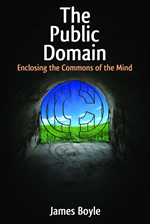
This is a link to the preface of a free online book about the importance of the public domain and the infringements on it by the trajectory of existing copyright law. I thought it was provocative and well worth considering. The implications are vast: what of a world where everything is "owned"? I often draw from out-of-print material and the public domain in my studies. likewise from used books long traded beyond the reach of royalty agreements. Should we close down the sale of used books to "protect" the interests of "intellectual property" owners? What about those resources that hardly anyone knows exist, locked in a vault under the "protection" of copyright law, sometimes called "orphaned works"? What of ideas whose consequences are earth-shattering, which will never see the light of day once they are retired out-of-print. I think this could lead to a new dark age. Think about the Catholic monopoly on thought during the last dark age. It isn't a pretty picture.
Many "free-marketeers" stress private property as supreme. After all, privatization is the only conceivable incentive to produce and innovate, right? But on what is innovation built? A new idea is a new analysis of a fact in the public domain. Once produced, the new analysis becomes the subject of further analysis, or at least it should. If ideas can be monopolized indefinitely, they are taken off the table of scrutiny.
The same dilemma concerns commodities like land, energy resources, gold, food, etc. Is there not a common source of all? How does that common source effect the ethos of ownership? Monopolization? Exclusive license? Profit? Not easy questions, to be sure, but needful if we would claim to have a developed ethical theory. It seems most are satisfied to let court rulings and "experts" dictate these matters, but I beg to differ. This issue touches on the mundane for each of us. Words of paralysing wisdom from Socrates urge us to "examine" a life worth living. In an age of high productivity and cheap accreditation (not inexpensive, but of dubious value), such work might grind progress to a momentary halt. Examination is to think before we act. Examination is to think about our actions. Examination is to consider our actions retrospectively and to repent when necessary.


No comments:
Post a Comment